The search landscape is now a messy, multi-surface environment to say the least. Gone are the days when “search” meant typing a query into a single box on a single platform. Today, search happens everywhere, across apps, AI systems, social feeds, marketplaces, and even inside the products we use every day. The result? A fragmented, fast-moving ecosystem where attention is scattered.
What used to be a Google-dominated universe has splintered into dozens of intent-driven surfaces:
- Traditional search engines: Google and Bing
- AI systems: AI Overviews, answer engines, chat-based discovery
- SERP (Search Engine Results Page) features: People Also Ask, Featured Snippets, Knowledge Graph elements, Local Pack, Image/Video packs, Shopping results
- Social platforms: YouTube, TikTok, Pinterest
- Forums & communities: Reddit, Quora
- E-commerce ecosystems: Amazon, Etsy, Temu, where users can skip Google entirely
Understanding how people discover content, products, and brands now requires understanding all of these surfaces and how they overlap. That’s the new reality of AI-era SEO. The next decade of search will not look like the last.
TL;DR: What This Means for SEO in the AI Era
- Search is no longer just Google links; it spans AI tools, SERP features, social platforms, marketplaces, and apps.
AI Overviews and chat-based search are driving more zero-click searches, reducing traffic from top-of-funnel informational content. - Brand authority, trust, and structured data now matter as well as rankings.
- Being cited by AI systems can still drive high-quality traffic and improve paid performance.
- Bottom-of-funnel content (case studies, product pages, pricing, comparisons) is more valuable than ever.
- AI systems favour known, trusted brands with consistent mentions across authoritative sources.
- SEO fundamentals still apply, but success now requires a holistic strategy combining SEO, content, digital PR, UX, and brand building.
- AI isn’t killing SEO, it’s shifting the focus from clicks to visibility, credibility, and conversion impact.
The AI-driven shift in search
The pace at which artificial intelligence has penetrated search results has been rapid. AI chatbots like ChatGPT, Gemini, and Perplexity, alongside Google’s AI Overviews, are reshaping how people discover brands, learn, shop and make decisions online. The ‘10 blue links’ that many have grown up with are here to stay for now, but may disappear in the future.
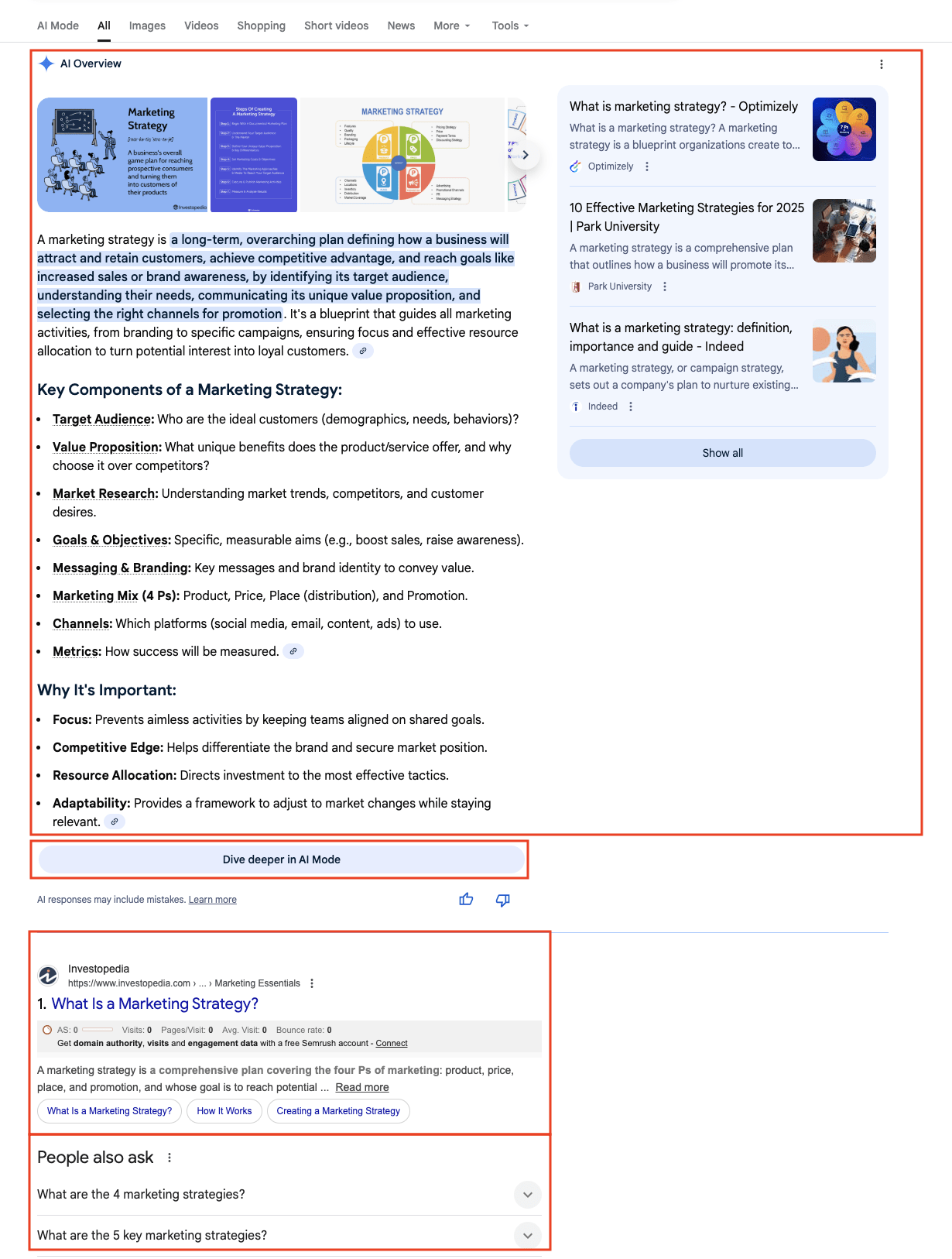
Yet many businesses are behind the curve in preparing for the impact AI will have on SEO and ensuring their brand remains visible and credible within AI-powered search experiences.
A recent Squarespace survey found that 46% of entrepreneurs believe AI could make or break their business within five years. If your business relies on being found online, understanding how AI affects SEO is crucial.
This article explores how AI is transforming SEO, what it means for your digital strategy, and how to optimise for the next era of search, one where AI visibility, brand strength, and human trust define success.
What Is AI SEO?
AI SEO is the process of optimising your website and online presence to appear within AI-driven search results, such as Google’s AI Overviews, Bing Copilot, ChatGPT, and Perplexity.
Sometimes, this means showing up directly in AI-generated responses. In other cases, it means being listed as a source, reference, or featured product within these results.
You might also hear AI SEO referred to as AEO (Answer Engine Optimisation), GEO (Generative Engine Optimisation), or LLMO (Large Language Model Optimisation). Whatever the term, the goal is the same:
To make your brand discoverable, trusted, and referenced in an AI-first search landscape.
Understanding the key AI players
Navigating AI-driven search starts with understanding the tools your business is likely to encounter. Here’s a simplified guide:
OpenAI (ChatGPT)
OpenAI developed ChatGPT, a conversational AI that can answer questions, summarise content, and generate text. In recent versions, it includes search-like capabilities that combine web data and AI reasoning. Authoritative content increases the likelihood of being referenced indirectly, especially when cited by trusted sources.
Google AI: Gemini, AIOs, and AI Mode

Google is integrating AI throughout its search ecosystem:
- Gemini: Google’s large language model, powering AI-driven tools across search and Workspace.
- AI Overviews (AIOs): AI-generated summaries at the top of search results that synthesise content from multiple sources. A study by Ahrefs shows AIOs appear for 21% of queries in their dataset. Semrush analysis saw AIOs appearing for 16% of queries by the end of 2025, still a significant number. The appearance rate varies dramatically, rising to almost 58% for question-based queries and appearing almost exclusively for informational content. This will only increase with time.
- AI Mode: A search experience where users can ask questions and receive detailed AI-generated answers instead of traditional search results. Google has increasingly merged AI mode experiences into a more unified AI search workflow, with conversational follow-ups flowing directly from AI-generated answers.
These tools favour trustworthy, structured, and expert content. Being referenced here requires your content to meet AI’s standards for clarity and authority.
Perplexity
Perplexity is a growing AI-powered search engine that blends web results with AI summaries. Unlike some AI chatbots, it links directly to sources.
AI Search vs Generative AI (GenAI)
Understanding the distinction between AI search and generative AI is critical. They are often used interchangeably, but they are different:
| AI Search | Generative AI (GenAI) |
| Enhances search results by synthesising information from multiple sources. | Generates new content (text, images, code) from prompts. |
| Is heavily influenced by indexed and authoritative web content. | May rely on model training data, prompt context, connected data and/or live retrieval depending on the system. |
| Examples: Google AI Overviews, Bing Copilot, Perplexity. | Examples: ChatGPT, Gemini, Jasper, Claude. |
| Goal: Find and summarise relevant information. | Goal: Create new content efficiently. |
Key takeaway: AI search affects how users discover your business, while generative AI is a tool for producing content to support visibility and engagement. It’s important to note that the lines between the two are blurring fast, with ChatGPT and Gemini combining elements of retrieval (AI Search) and Generative AI.
AI Search v Traditional Search
AI Search and Traditional Search have some key differences to note. AI Search offers synthesised, conversational answers by understanding user intent and context, while Traditional Search provides links to relevant webpages based on keyword matching.
AI Search excels with complex, conversational, or long-tail queries and offers personalised results, whereas personalisation in Traditional Search is limited to your location and search history.
Traditional Search makes it easier for the user to inspect multiple original sources directly, whereas AI Search synthesises those sources and therefore introduces another layer where errors or misinterpretation can occur.
Traditional Search
- Keyword-based: Matches keywords in your query to web pages containing them.
- List of links: Presents a list of web pages, and you have to click through them to find the information.
- Traditional search retrieves information.
- Limited personalisation: The searcher’s location, their search history and device.
- Manual updates: it requires manual algorithm updates and adjustments to improve its performance.
AI Search
- Intent-based: Uses natural language processing (NLP) to interpret the user’s intent, context, and semantics.
- Synthesised answers: Provides direct, conversational, and consolidated answers by combining information from multiple sources.
- Handles complex queries: Capable of understanding complex, long-tail, or voice-input questions.
- Personalised and predictive: Learns from user behaviour and past searches to offer personalised and predictive results.
- AI models and retrieval systems are periodically improved using updated models, ranking systems, data and user-feedback signals.
How AI is transforming SEO
1. Loss of traffic for informational queries
One of the most significant shifts in AI-driven SEO is the increasing prevalence of zero-click searches. AI-powered search models now generate direct answers to many informational queries (what is…, who is…).
Instead of seeing a list of 10 blue links and clicking through to a website, users often get what they need right on the results page. You’ve probably noticed this: when you ask Google a question, the answer may appear at the top of the results page, often in an AI Overview box, instead of a traditional list of links.
Research shows that the vast majority of AIO appearances are for informational queries, while brand, transactional and commercial searches rarely trigger them. ‘Best’ or comparison queries tend to trigger AIOs for these commercial terms.
Although zero-click behaviour existed before AI (featured snippets and knowledge panels), this behaviour is further reducing organic traffic for publishers that rely on top-of-funnel, informational content. In fact, according to a study by Seer Interactive of their dataset, organic Click Through Rates (CTR) are greatly impacted by AIOs, falling from 1.62% when AIOs are not shown to 0.61% when they are.
Pew Research also shows that users who encounter an AIO clicked a traditional search link in 8% of cases, versus 15% of those who don’t encounter an AIO. The same research shows that Google users are more likely to end their browsing session entirely after visiting a search page with an AI summary than on pages without a summary.
The more Google and others “answer” without attribution, the less value you get from organic visibility. Google has been adjusting citation and linking behaviour inside AI-generated results to address concerns from publishers.
If you’re not actively building brand, community, and direct relationships with your audience, you’re playing on borrowed ground.
Focus on Bottom-of-Funnel Content
To counter this, focus on creating bottom-of-funnel content, the kind that helps buyers make their final purchase choice or contact decision. It’s your most powerful SEO asset, despite a SEMRush study that shows an increase in the number of middle-of-the-funnel and bottom-of-the-funnel terms that trigger AI Overviews over the course of 2025:
- Commercial queries: up from 8.15% to 18.57%
- Transactional queries: up from 1.98% to 13.94%
- Navigational queries: up from 0.84% to 10.33%
AI may summarise top-level information, but it can’t replicate real-world experience, original insight, trust or expertise. That is where your advantage lies.
Examples include:
- Case studies and project outcomes
- Detailed product, product comparison, or service pages
- Reviews and testimonials
- Transparent pricing and process pages
AI may reduce the number of clicks to your site, but the quality of those clicks is increasing, according to Google. Visitors are further along the buyer journey when they land on your website.
To make every visit count, create conversion-optimised pages, clear CTAs (demo or trial sign-ups, form completions), and a helpful UX that turns interest into action.
Optimise Informational Content for Citation
While shifting focus to bottom-funnel content, do not neglect top-of-funnel pages entirely. Structure informational content so that important answers, definitions and supporting evidence are easy for both users and search systems to understand. Use descriptive headings, concise answers where appropriate, clear supporting detail and relevant structured data where it genuinely applies.
Being Cited Is Associated With Higher CTR
Being cited by AIOs can lead to a 35% increase in organic clicks, according to the Seer Interactive study, but this zero-click effect is not limited to organic results.
The study also shows a massive decline in Paid Search CTR for queries with an AIO, though being cited in an AIO can produce 91% more clicks on paid search ads. Seer’s dataset found substantially higher paid CTR when the same brand was cited in the AI Overview, although the research does not establish that the citation itself caused the increase.
2. AI Commerce & Product Discovery

As AI search becomes more transactional, content alone is no longer enough to drive revenue.
When users ask:
- “Best CRM for manufacturing”
- “Compare solar panel suppliers near me”
- “Order industrial fasteners with next-day delivery”
For transactional product discovery, AI systems can increasingly rely on structured merchant and product information alongside conventional webpages.
AI commerce engines prioritise:
- Product schema (price, availability, shipping, returns)
- Merchant Centre feeds
- Reviews and ratings
- Inventory accuracy
- Delivery timelines
- Trust and fulfilment signals
If your product, pricing, and availability data aren’t machine-readable, you are making it harder for AI commerce systems to understand, compare and surface your products reliably.
And with Google launching Universal Commerce Protocol that enables agentic actions on Google AI Mode and Gemini (including direct buying), more and more purchasing actions will take place within AI tools.
As AI in search becomes more agentic, we will likely see it move beyond recommendations, but also completing actions:
One of the biggest developments now is AI systems moving beyond recommendations into actions:
- Booking
- Purchasing
- Scheduling
- Comparing vendors
- Completing transactions
3. The emergence of alternative search tools
While Google still dominates with roughly 90% of the global search market and more than 5 trillion searches per year, AI-powered alternative search tools are gaining traction and entering mainstream use. Examples include Perplexity, Bing Copilot, and AI-focused vertical search tools.
These platforms leverage AI to understand queries contextually and generate human-like responses. They provide more conversational, precise, and actionable results, changing user expectations and driving even more zero-click searches.
For businesses, this means:
- Visibility is no longer only about Google rankings. Visibility without business impact is pointless. The goal isn’t just to be seen; it’s to be chosen.
- Being present and authoritative across multiple AI-driven platforms increases your chances of being discovered.
- Content must be structured, factual, and easily referenceable to appear in AI results.
4. AI-enhanced search engine algorithms
Search engines themselves are integrating AI to improve relevance. Google, for instance, uses NLP and other machine learning technologies to better understand the intent behind queries and the context of content.
What this means for SEO:
- Outdated tactics like keyword stuffing or over-optimising pages are losing effectiveness.
- Writing comprehensive, high-quality, context-rich content that answers user questions clearly is more valuable than ever. Conversational, long-tail keywords are also important, as they more accurately represent a user’s intent and natural way of speaking.
- Businesses should focus on creating human-first content, while still incorporating SEO best practices such as headings, internal links, and meta information.
In short: AI algorithms reward content that is helpful, authoritative, and structured, and genuinely meets the needs of your audience.
5. AI content overload and indexing challenges
The web is now flooded with AI-generated content. Search engines appear more selective about what they index.
Search engines are increasingly selective about what they crawl, index and retain. Low-value, repetitive or mass-produced pages may be crawled but never indexed, or may be dropped from the index if Google considers them insufficiently useful or distinctive.
In the long term, search engines are likely to favour useful, original and authoritative content regardless of how it was produced. Human expertise and editorial review can help ensure AI-assisted content meets that standard.
Why This Matters
The combination of zero-click searches, AI-powered alternative search engines, and AI-enhanced algorithms is reshaping the rules of SEO. Businesses that adapt will continue to thrive, while those who rely on old tactics will see diminished visibility.
SEO is not dead, it’s evolving!
Despite the rise of AI, SEO remains the backbone of digital visibility.
SEO fundamentals remain essential. Google continues to account for roughly nine in ten traditional search-engine queries globally and has said it handles more than five trillion searches annually.

AI search systems still depend heavily on crawlable, indexable and high-quality web content and other trusted data sources.
AI isn’t replacing SEO, it’s reshaping it. The focus is shifting from chasing clicks to building meaningful visibility and conversion-driven impact. Keyword-led SEO strategies increasingly need to be complemented by topical authority, brand credibility, original expertise and broader visibility.
Key fundamentals to prioritise:
- Create a strong foundation. Fast load speed, strong technical SEO (think meta title tags and descriptions, structured headings and alt text) and easy navigation are still important.
- Use a hub & spoke model when creating content. Logical internal linking between core service pages and related pages helps users find content.
- Short, scannable paragraphs for readability. Embed video to increase dwell time.
- Answering real user questions
- Keeping your content up to date. Dead links & outdated information undermine trust.
- Local search optimisation
- Structured data helps AI search tools understand context.
- AI models and AI search engines prioritise trusted sources. This is where digital PR and brand visibility intersect with SEO:
- Brand mentions in authoritative sources increase your chances of appearing in AI-generated answers.
- Case studies, whitepapers, and research publications signal authority.
- Directory listings, partnerships, and industry citations reinforce credibility.
- For businesses in manufacturing, construction, and business services, being referenced in trade publications, association websites, and industry blogs can directly impact AI visibility.
- Optimise conversions on your website. AI commerce capabilities aren’t far away for products, but for service businesses, conversions are more likely to take place on your website (for now).
- Adhere to the principles of E-E-A-T (Expertise, Experience, Authoritativeness, Trustworthiness.
Ways To Strengthen E-E-A-T Signals
As well as the fundamentals listed above, your website needs to demonstrate E-E-A-T throughout. The following practices can help users and search engines better understand your experience, expertise, authority and trustworthiness..
- Expert content: written or reviewed by genuine specialists, with journalistic production values. Demonstrate Experience with User-Generated Content (UGC). Embed real-world media, like customer photos, video demos, or in-use examples of your product/service, as this proves real-world application, which the ‘Experience’ component of E-E-A-T rewards. Whitepapers, buyer’s guides and product documentation are all useful content types.
- Positive reputation: showcase reviews, testimonials, and awards (beyond Google Reviews).
- Transparent contact details: physical address, phone number, and multiple contact options.
- About page and team profiles: show who you are and what you stand for.
- Clear ownership and accountability: name real people to contact for services or complaints.
- Author bios: include credentials, experience, and links to LinkedIn or published works.
- Updated content: Keep content genuinely up to date and, where useful to readers, show meaningful published and last-reviewed dates.
- Cited sources: reference statistics, studies, and quotes properly.
- Recognised experts: leverage authoritative voices from your field.
- Flawless UX: intuitive navigation and error-free content.
- Case studies and evidence: back up all claims with proof (“Bradford’s Best Marketing Agency” should show why).
- No clickbait: honesty builds trust.
- Fact-check and proofread everything.
- Visible policies: privacy, cookies, terms of service.
- Media mentions: reinforce your brand’s real-world credibility.
SEO isn’t dead; it’s just smarter, more strategic, and more integrated with brand storytelling.
How AI Decides Which Brands to Mention
AI visibility isn’t simply a traditional 1–10 ranking contest. Systems retrieve, rank and synthesise sources based on relevance, usefulness and other signals, meaning brands are increasingly competing for inclusion within generated responses as well as conventional positions.
Factors that can plausibly contribute to AI discoverability and have been observed in citation/visibility research include:
- Frequency of brand mentions across trusted sources
- Co-mentions with key topics and competitors
- Citations in authoritative publications
- Semantic proximity to industry concepts
Consistency of messaging across platforms
This means:
- A shift in emphasis to being “mentioned everywhere”
- Brand search demand becomes a visibility signal
- Known brands are favoured, but niche experts and forums such as Reddit are also cited.
In AI search, you’re not competing for position; you’re competing for inclusion.
Becoming the brand people ask for is now an SEO strategy.
Building a holistic brand for the AI era
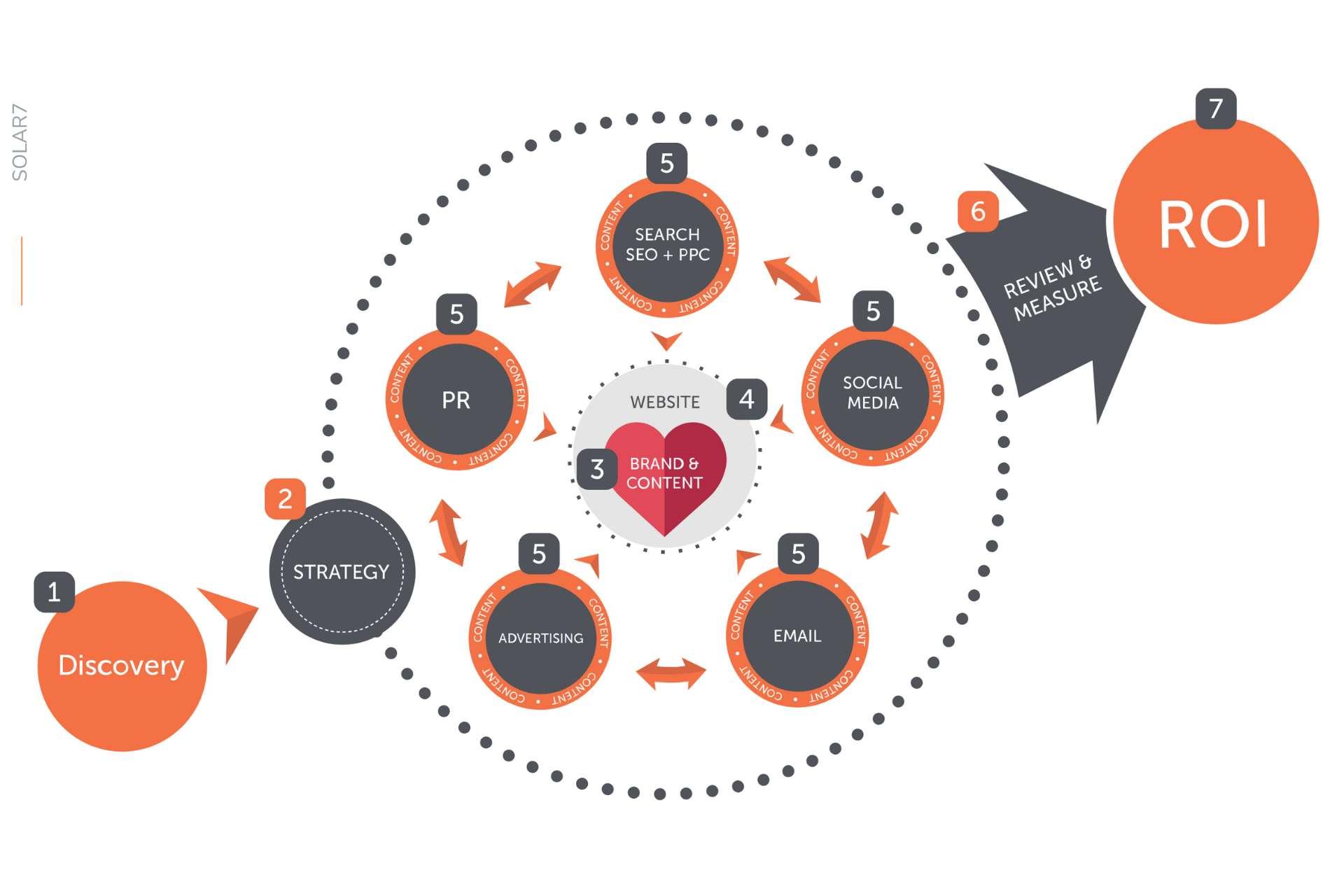
AI visibility isn’t just about your website; it’s about your broader digital ecosystem. SEO no longer operates in a silo. AI search systems can draw signals and information from your broader digital footprint, not just your own website.
The stronger your brand ecosystem, the more signals AI has to trust and reference your business.
You should adopt a holistic marketing approach:
- Combine SEO, content marketing, digital PR, and social engagement to build your brand and be present across the whole search landscape. Think beyond rankings and start thinking as a full-stack marketer. Become known for what you do, as known brands receive third-party mentions and links organically. External validation builds trust and credibility.
- Ensuring your website is fast, well-structured, and technically sound.
- Invest in customer experience, reviews, and post-purchase follow-up.
- Build an owned audience through email, newsletters, and events. Retention and loyalty-building marketing activities to an existing customer base remove the reliance on search and social channels. After all, you are playing in their sandpit, and you have to play by their rules.
- First-party data is non-negotiable. It’s your most valuable marketing asset. AI search breaks traditional analytics. No referrer data, “Direct” traffic misattribution, no keyword visibility and no clear user journey are just some of the ways AI will cause tracking issues, meaning email subscribers, CRM contacts, communities, event attendees, and repeat customers are invaluable to your business. Growth now comes from reducing dependence on rented attention. The brands that win will be those that: capture emails early, offer valuable gated content, nurture relationships post-conversion, and build loyalty beyond search.
- Make every visitor interaction meaningful: a conversion, inquiry, or next best action (e.g., newsletter signup).
The more consistently your brand shows up as helpful, human, and authoritative, the more likely AI and users alike will trust it. Brand, marketing and SEO are the foundation of discoverability..
Marketing That Strengthens E-E-A-T
Here’s how to amplify trust and authority across multiple channels:
- Build your brand. Growing branded search demand can be a useful indicator of increasing brand awareness and consideration.
- Creative advertising that reinforces brand identity
- Helpful, original content for search and beyond. Publish expert-led, evidence-based content that informs real buyers and signals authority.
Detailed guides, technical papers, product manuals, and case studies can help you be cited by AI Search tools. Repurpose original research and expertise into formats suited to LinkedIn, industry communities and relevant forums rather than simply duplicating the same article everywhere. - New data and insights creation, e.g., research, whitepapers
- PR and publicity earn media mentions and high-quality links. Links from credible websites increase visibility and AI citations, and help to build a strong brand footprint.
- Book or report publishing to position thought leadership
- Contribute to industry platforms. Guest post on credible, high-traffic sites, or participate in forums, trade associations and niche websites.
- Develop your authorship profiles (LinkedIn, Medium, company blog)
- Podcasts: host or appear on relevant industry shows
- Link building from reputable sites
- Active social media presence, including others mentioning or discussing your brand
- Speaking engagements build your personal brand
Together, these efforts strengthen your digital footprint, signalling to both AI and human audiences that your brand is an established authority in your space.
AI content creation: Human + machine collaboration
AI can speed up production, but only humans can create authentic, trust-building narratives.

AI tools like ChatGPT and Gemini are excellent for brainstorming, outlining, or producing first drafts, but to stand out in AI-driven search, your content must demonstrate authentic human insight and journalistic quality.
Generative content on its own can’t provide the credibility and expertise that both search engines and readers reward. To ensure quality:
- Use AI for efficiency, not originality.
- Edit AI content with human experience: Edit for tone, accuracy and personality. Add unique insights, data, and case examples from real customers or projects.
- Write to journalistic standards: Include verified facts, quotes from credible sources, and clear author attribution to signal trust. Ensure all statistics and claims are sourced and cited.
- Use human tone and empathy: AI can imitate an empathetic tone, but it cannot contribute lived experience, customer relationships or genuine personal perspective. Build human connection through storytelling and brand voice.
This approach aligns with Google’s E-E-A-T principles. Human-edited, experience-based content stands out in both AI and traditional search results and will continue to be a long-term advantage.
Standing out in the AI era
AI Search tools are evolving at a pace. As AI search tools become more conversational and transactional, what will differentiate your business is not how often you appear, but how trusted you are.
The strongest brands will:
- Combine technical SEO, AEO, and E-E-A-T.
- Create authentic, human-led content.
- Build multi-channel brand visibility that reinforces authority.
- Learn and adapt
AI may change the mechanics of search, but it doesn’t change what people (and algorithms) reward: clarity, expertise, and genuine value.
Final Takeaway
AI isn’t the death of SEO, it’s its next evolution. AI is changing how discovery works, not why people choose. It’s becoming inseparable from brand, data, and customer experience.
Your mission now is to build brands, relationships, and trust that machines can’t fake.
- Build a following
- Be human
- Add value to the conversation
- Provide outstanding customer service
Marketing fundamentals will define the next era of search. Businesses that master this won’t just adapt to AI, they’ll lead in it.
In the AI era, visibility is earned, not ranked.